Automatic Beat License PDFs: Why Producers Need a Built-In License System
Why beat sellers need a built-in license system: automatic PDF certificates, custom lease tiers (MP3, WAV, stems), and a checkout that delivers files and proof without manual contracts.
Most beat sellers do not lose money because the drums are weak. They lose money when checkout feels sketchy. The artist hears the beat, wants the WAV, then hesitates because there is no clear license, no written terms, and no certificate they can show a manager later.
That is the gap a real beat license system fills. Not a PDF you paste into Gmail at midnight. A store flow that sells tiers, takes payment, delivers the audio, and generates an automatic beat license PDF with the buyer's name, the beat title, the issue date, and the exact rights they paid for.
Roqstar ships that natively. License tiers live on the product. The certificate goes out with the download. You stay in the DAW instead of playing unpaid lawyer.
Short version: artists buy permission, not 'vibes.' Publish clear tiers, deliver a PDF certificate with every paid lease, and stop rebuilding that workflow with random ecommerce apps.
What 'built-in' actually means for beat sellers
Marketplaces have taught artists to expect licenses. If you move to your own store and only send a ZIP, you look less professional than the marketplace page they left. Ownership of the storefront only wins if the licensing experience stays sharp.
A built-in system usually covers three jobs in one place:
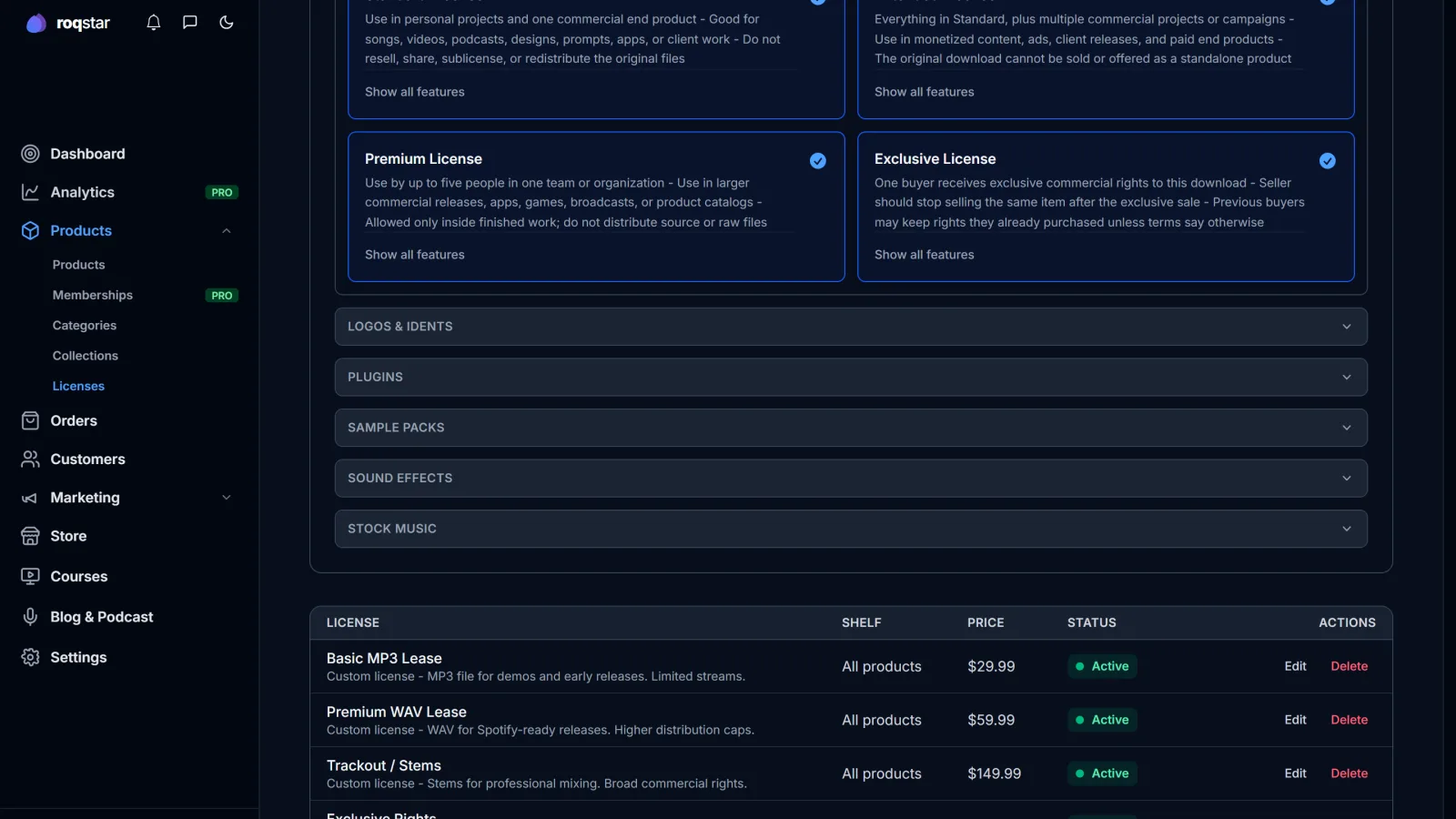
- License tiers on the product (Basic, Premium, Trackout, Exclusive), each with its own price and terms
- Instant file delivery after payment (MP3, WAV, stems, or whatever that tier includes)
- An automatic PDF certificate that records who bought what, when, and under which rights
Rights vocabulary still matters. If you need the map for leases vs exclusives, start with beat licensing explained. This article is about the machinery that makes those licenses feel trustworthy at checkout.
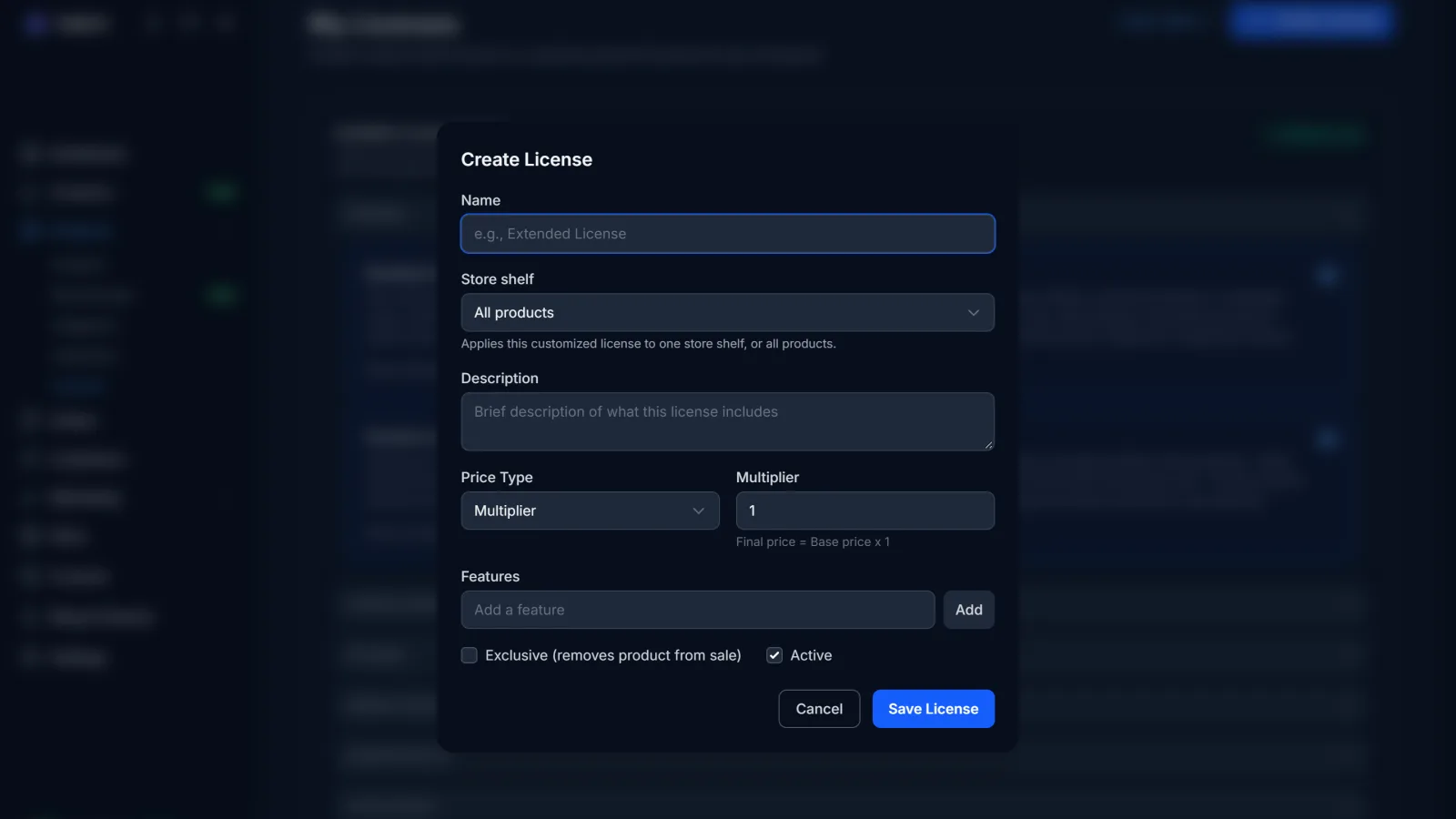
Custom license tiers that actually upsell
When you control the tiers, you can design a ladder artists understand in ten seconds. The goal is not ten confusing names. It is a few clear steps with real differences in files and rights.
A ladder many producers use:
- Basic (MP3): entry lane for newer artists posting to SoundCloud or testing a hook. Tighter stream or distribution caps. Lower price.
- Premium (WAV): release-ready file for artists aiming at Spotify and serious uploads. Higher caps. Usually your volume default.
- Unlimited / custom trackout (stems): for artists who want to mix in a real studio. You set stream, radio, and performance limits (or remove them) to match the price.
- Exclusive: buyout path on the same page when someone wants the beat off the lease shelf.
That is strategic upselling, not markup for its own sake. The middle WAV tier should feel like the obvious choice. Trackout is the serious upgrade. Exclusive is scarcity, not 'WAV plus a little more.' Dollar ranges and psychology live in how to price beat licenses. Volume leases: how to sell non-exclusive beats.
Why the PDF certificate matters more than producers think
A clean beat page converts. A beat license certificate protects the relationship after the sale. Artists and managers take you more seriously when they receive a document with:
- Issue date
- Buyer name
- Beat title
- License tier name
- The usage terms that applied at purchase
That PDF is proof. If a distributor, label contact, or collaborator asks 'are you cleared to use this beat?', the artist is not digging through Instagram DMs. They open the certificate.
It also protects you. When stream caps or commercial limits are written into the sold terms, 'I thought it was unlimited' gets a lot harder to argue. Clear copy on the product page still comes first. The certificate freezes what was sold that day.
Roqstar generates that PDF as part of fulfillment. Buyers can download it with the order. You can attach it on the receipt email. No LibreOffice template. No 'I'll send the contract later.'
The automation loop artists already expect
Here is the sale when licensing is native:
- Artist picks a license tier on your store
- They pay
- They get the audio for that tier immediately
- They get an individual license PDF for that purchase
- You get paid and keep producing
That loop is table stakes on serious beat platforms. On a generic digital shop that only emails a ZIP, you recreate it by hand or with plugins. Hand work does not scale past a few sales a week. Plugin stacks break when updates land.
Shopify and 'just add an app' vs audio-native stores
Classic all-in-one shops can sell files. Beats are not a T-shirt with a download link stapled on. You need license pickers, tier pricing, stems vs MP3 delivery, and a certificate that matches the tier the buyer chose.
On Shopify-style stacks, producers often end up paying for extra apps for licenses or contracts. Those add-ons can be expensive, slow to configure, and brittle when themes or checkout change. Some work. Plenty create half-finished flows where the PDF is missing, the terms are generic, or exclusive flags do not sync with inventory.
Roqstar's point is narrower and deeper: digital and audio catalogs under your brand, with license tiers and PDF certificates built in. You are not bolting music commerce onto a physical-goods platform. Compare the broader store decision in Gumroad vs Shopify vs Roqstar and Roqstar vs BeatStars.
How to use the system strategically
1. Publish the ladder, not a single mystery price. Three lease tiers plus exclusive on hot beats. Make WAV the default most people should buy.
2. Put real differences between tiers. File type, stem access, stream caps, radio, monetization. If Basic and Premium only differ by $2 and the same WAV, nobody upgrades.
3. Write caps and upgrades before a song blows up. Non-exclusive does not mean unlimited everything. Say what happens when streams pass the lease: upgrade or exclusive. Silence here is how friendships end.
4. Treat the PDF as part of your brand. Managers remember producers who look organized. A certificate with your store name on it is free professionalism on every sale.
5. Keep producing. The whole point of automation is that fulfillment stops eating your evenings.
License system checklist
If a line is missing, fix product before you push more type-beat traffic.
- MP3 / WAV / trackout tiers with visible prices
- Plain-English caps, credit, and monetization rules
- Automatic PDF certificate on every paid license
- Audio files deliver with the matching tier (no manual email)
- Exclusive option defined for beats you are willing to take offline
FAQ
Do I need a PDF if my product page already lists the terms?
Yes, if you want proof after the sale. The page sells. The certificate is what the artist keeps when someone asks for paperwork six months later.
Is an automatic certificate the same as hiring an entertainment lawyer?
No. Your terms still need to match how you actually sell (caps, exclusivity, credits, uncleared samples). Automation delivers the document. It does not invent good rights language for you. Start from clear tiers, then get advice if you run big exclusive deals.
Can I sell without licenses?
Some products do not need them. Beats almost always do. Artists expect leases. Selling 'files only' invites disputes and makes you look casual next to stores that issue certificates.
Where should I send type-beat traffic?
To a branded product page with the ladder visible and checkout that delivers files plus the PDF. Channel ideas: where to sell beats online. Full selling loop: how to sell beats online.
Related reading
- Beat licensing explained
- Beat leasing explained for producers
- How to price beat licenses
- How to sell exclusive beats
Automatic beat license PDFs are not a nice-to-have for serious producers. They are how you look like a music business, protect both sides with written terms, and upsell MP3 to WAV to stems without rewriting a contract every time. A native license system beats a bolted-on app stack. Keep the hours for the next beat.
Sell leases with tiers and PDF certificates on a store you own. Open a beat store on Roqstar. Instant download after payment. See pricing when you are ready.