How to sell sheet music online (and earn from it)
Learn how to sell sheet music online step by step — package scores, price them, pick licenses, and use subscriptions or donations so fans can support you beyond one-off PDFs.
Somewhere between the last rehearsal mark and the “export PDF” click, a quiet question shows up: could people pay for this?
They already do — teachers buy ensemble charts, students buy practice editions, church musicians buy hymn arrangements, YouTube learners buy transcriptions they can trust. The hard part is not that sheet music “doesn’t sell.” The hard part is treating it like a product people can find, understand, and download without emailing you at midnight for a Dropbox link.
This guide walks through how to sell sheet music online in a way that feels like craft, not spam — and how to earn money from more than a single PDF sale.
Start with what you are actually selling
Sheet music is a file, yes. Buyers are buying something else: clarity under pressure. A choir director printing parts at 10 p.m. does not want mystery fonts, missing cues, or a piano reduction that fights the singers. A guitarist learning your arrangement wants page turns that make sense and fingerings that don’t feel like a dare.
So before you price anything, decide the product shape:
- Single piece — one score, maybe with optional parts.
- Parts pack — conductor score + individual instrumental or vocal parts, clearly labeled.
- Collection — a themed set (advent, jazz standards, exam repertoire) that feels intentional as a bundle.
- Edition with extras — score + practice notes, backing track, or a short video walkthrough.
If you sell “12 random PDFs in a ZIP,” buyers treat you like a file dump. If you sell a clean edition with a use case on the page — “for SATB choir, intermediate, 3.5 minutes” — you sound like a publisher who happens to be one person.
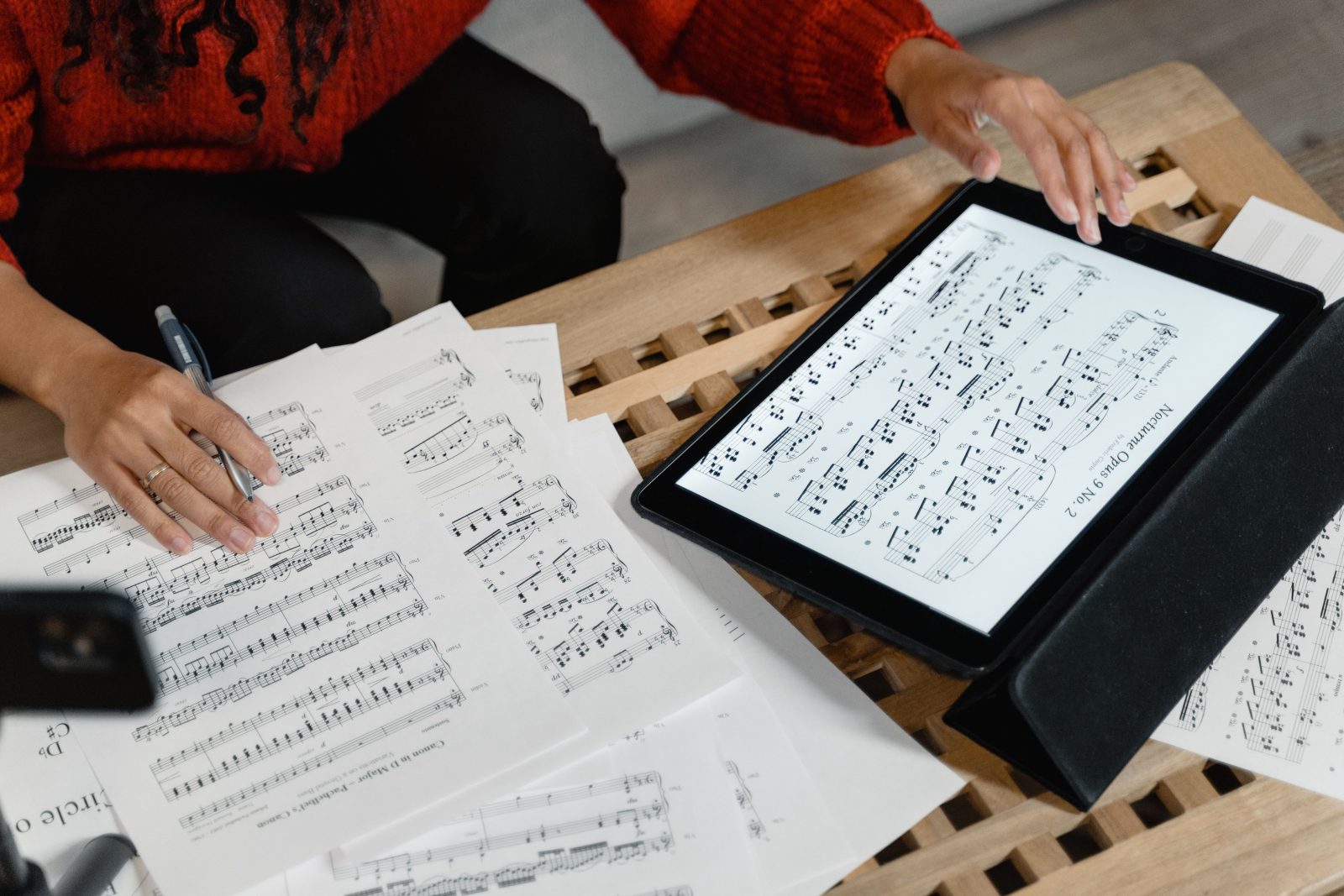
Package the files like a grown-up publisher
Your delivery ZIP is part of the brand. A few habits save you from one-star “where is the alto part?” messages:
- Name files clearly —
Title_SATB_Score.pdf,Title_Alto.pdf, notfinal_FINAL2.pdf. - Include a short README — instrumentation, duration, difficulty, page count, and which PDF is the “print this first” score.
- Export for print — readable staff size, margins that survive home printers, consistent fonts.
- Add a watermark strategy that doesn’t punish buyers — protect previews; don’t make paid editions look like samples.
- Version once, then stop tinkering in secret — if you fix a wrong accidental, bump a version note on the product page so returning customers know.
Instant digital delivery matters here. Nobody wants to wait three days for an arrangement they need for Sunday. On a storefront built for digital products — the kind Roqstar is designed around — checkout and download sit in the same flow, so the buyer gets the ZIP without you becoming unpaid tech support.
Write the product page for musicians, not for algorithms
Musicians skim. Help them decide in under a minute:
- Instrumentation and voicing
- Key, range notes if relevant, and difficulty in plain language
- Duration and occasion (worship, recital, classroom, gig)
- What is included in the download
- License in one honest paragraph (more below)
- A preview: first page, sample system, or audio of the piece
Previews do the sales work your adjectives cannot. A muddy thumbnail of page one still beats “beautiful arrangement!!!” in the description. If you have a recording — even a simple phone take or MuseScore playback you are not embarrassed by — put it where ears can settle nerves before wallets open.
Price sheet music without apologizing
Underpricing feels humble. It often reads as “this might not be serious.” Anchors that work in practice:
- Single short piece / lead sheet — entry price; low friction for teachers browsing on a phone.
- Full arrangement with parts — mid range; this is where most working arrangers live.
- Large collection or seasonal pack — higher; only if the set is coherent and saves someone hours.
- Custom commission — quote separately; do not crush custom work into the same SKU as a PDF.
Look at what similar niches charge, then ask a sharper question: does your page explain voicing, difficulty, and license better than theirs? If yes, you can sit toward the top of the range. If not, fix the page before you raise the number.
Can you earn real money selling sheet music? Yes — especially when you own a niche (jazz combo charts for schools, flexible worship band charts, intermediate piano transcriptions of popular repertoire) and you keep releasing. One viral PDF is luck. A catalog with returning choir directors is a business.
Licenses: say what people may do with the PDF
Confusion here creates refunds and awkward emails. Spell out the boring truth:
- Is this for one performer, one classroom, or one ensemble?
- May they print multiple copies for their choir, or must each singer buy?
- Is recording / streaming of a performance allowed?
- Are arrangements of copyrighted songs cleared — or only original works / public domain?
If you arrange copyrighted material, licensing is not a vibe; it is homework. Original compositions and public-domain works are cleaner to start with. Either way, put the terms on the product page and in the download. Roqstar’s product tools are built so digital items can carry clear license language beside price and files — which is exactly where buyers look when they are about to click pay.
Where to sell: marketplace, your site, or both
Marketplaces can help discovery. They also train buyers to compare you in a grid of strangers and to belong to the platform, not to your catalog.
A simple rule many composers land on:
- Use marketplaces selectively for new eyes.
- Send people who already know your name to a store under your brand — your domain when you are ready, your product pages, your follow-up.
That owned store is where Roqstar fits naturally: white-label storefront, digital downloads, checkout, and room to grow past “one PDF link in my bio.” You are not rebuilding Shopify plugins for file delivery. You are putting scores in front of people who already trust your writing.
Earn beyond the single PDF: subscriptions, memberships, and donations
One-off sales pay for coffee. Recurring support pays for the next semester of writing. A few models work especially well for sheet music:
Subscriptions and member libraries
Offer monthly (or yearly) access to a vault: new charts each month, early access to editions, or a member-only pack for teachers. Buyers who would hesitate at buying twelve separate PDFs often say yes to “everything this season for one clear fee.”
On Roqstar you can run memberships and subscriptions beside regular products — so a choir director can buy a single anthem today and join your member library when they are ready, without you juggling three different platforms.
Pay what you want
Useful for tip-friendly pieces, study scores, or “support if this helped your rehearsal.” Set it thoughtfully (a suggested amount helps), and treat it as goodwill revenue, not your only plan.
Donations
Some fans want to support the composer without needing another PDF. A storefront donation button (Roqstar has a donation app you can enable) lets people contribute after a free sample, a livestream, or a church service where your arrangement landed. It is not a substitute for priced editions — it is a soft on-ramp for people who already feel grateful.
Mix these deliberately: paid editions for clear use cases, a membership for superfans and institutions, donations for “I just want to say thanks.”
Get traffic without turning into a full-time marketer
Sheet music stores rarely grow from cold SEO alone. Scores move when people hear or need them:
- A YouTube or rehearsal video with a calm link in the description
- Short clips of the hard page — the modulation, the descant, the ending — with the product underneath
- Email to past buyers: “new set for Advent / spring concert”
- One free or pay-what-you-want piece as a sample of your engraving quality
- Teacher and director communities where you help first and sell second
Coupons and affiliates can come later. First, make the music audible and the page trustworthy. Then give people one primary link you control.
A launch checklist you can finish this month
- Pick one niche pack or three strong singles — not forty half-finished files.
- Export clean PDFs + a README; name parts like a publisher.
- Write product pages with instrumentation, difficulty, duration, preview, and license.
- Price for clarity; leave custom commissions off the impulse SKUs.
- Put everything on a branded digital store with instant download after payment.
- Add a membership or monthly drop once you can ship new value on a cadence.
- Turn on donations or pay-what-you-want for fans who want to support without another purchase.
- Drive the audience you already have (YouTube, choir networks, email) to that store first.
Selling sheet music online is less about hacking algorithms and more about respect: respect for the page, for the ensemble that will print it at the last minute, and for your own time. Package well, license clearly, own the checkout, and give loyal musicians a reason to come back — whether that is the next edition, a subscription library, or a simple way to donate when a free chart saved their Sunday.
If your scores are ready and your audience already knows your name, the missing piece is often a store under your brand — downloads, licenses, memberships, and donations in one place. That is what Roqstar is built for: your music on the front, digital delivery in the background. A clean home for people who already want to play what you write.