When a digital product vault beats one-off packs
A practical guide to vault-style memberships for digital catalogs: when all-access beats selling packs one by one, how to structure updates, and when to stay with one-off sales.
One-off packs are easy to understand. Pay once, download the ZIP, done.
A vault membership is a different promise: pay monthly (or yearly) for ongoing access to a growing library. For some catalogs, that is the cleaner business. For others, it is a fancy way to rent files people would rather own — and they will churn while telling their friends the membership felt unfair.
This is not a general “should you do subscriptions?” essay. It is about vaults — all-access digital catalogs — and when they beat selling packs one at a time.

What a vault actually is
A vault is a browsable library under one membership: beats in a genre family, LUT looks across seasons, Lightroom presets, Premiere templates, sample kits, notation packs. Members do not buy “pack #14.” They subscribe to the shelf.
That only works if the shelf keeps changing in a way members can feel. A vault that freezes after launch is a one-off pack with worse optics.
When one-off packs are still stronger
Stay with single packs when:
- Your catalog is small (a handful of finished products) and updates are rare
- Buyers want ownership of a specific tool for a specific job (“these 8 wedding LUTs,” “this lease beat”)
- You cannot commit to a visible update rhythm for the next few months
- Support is already heavy per sale and unlimited access would multiply it
Packs also teach you what people actually want. Many strong vaults start as three or four packs that sold well enough to prove a niche.
When a vault starts to win
Vaults fit catalogs where returning buyers are already a pattern:
- Beat makers with a lane (trap, lo-fi, gospel) and listeners who come back for “whatever dropped this month”
- Colorists / editors shipping seasonal LUT or template drops
- Preset / template sellers who refresh for new software versions, trends, or niches
- Educators whose downloadable worksheets and scores grow into a library students revisit
Signals you are ready:
- People ask “do you have a bundle of everything?”
- You already release on a rhythm you can describe in one sentence
- The library is large enough that browsing beats hunting individual SKUs
- You can explain the ongoing value without apologizing
The promise you must keep
Members are paying for access and momentum. Spell both out:
- What is included today — approximate size of the library, formats, license basics
- What “ongoing” means — monthly drop, quarterly refresh, early access, member-only packs
- What happens if they cancel — access ends; downloads already taken usually stay on their machine within the license (say this plainly)
- What is not included — custom grades, unlimited 1:1 support, commercial resale of your files
Vague “unlimited cinematic looks forever” copy attracts the wrong buyers and burns the right ones.
How the membership side looks in practice
Once the offer is clear, you need three surfaces that feel like one product: seller tools that create tiers, a storefront where someone subscribes, and a customer portal where they come back — without a scavenger hunt.
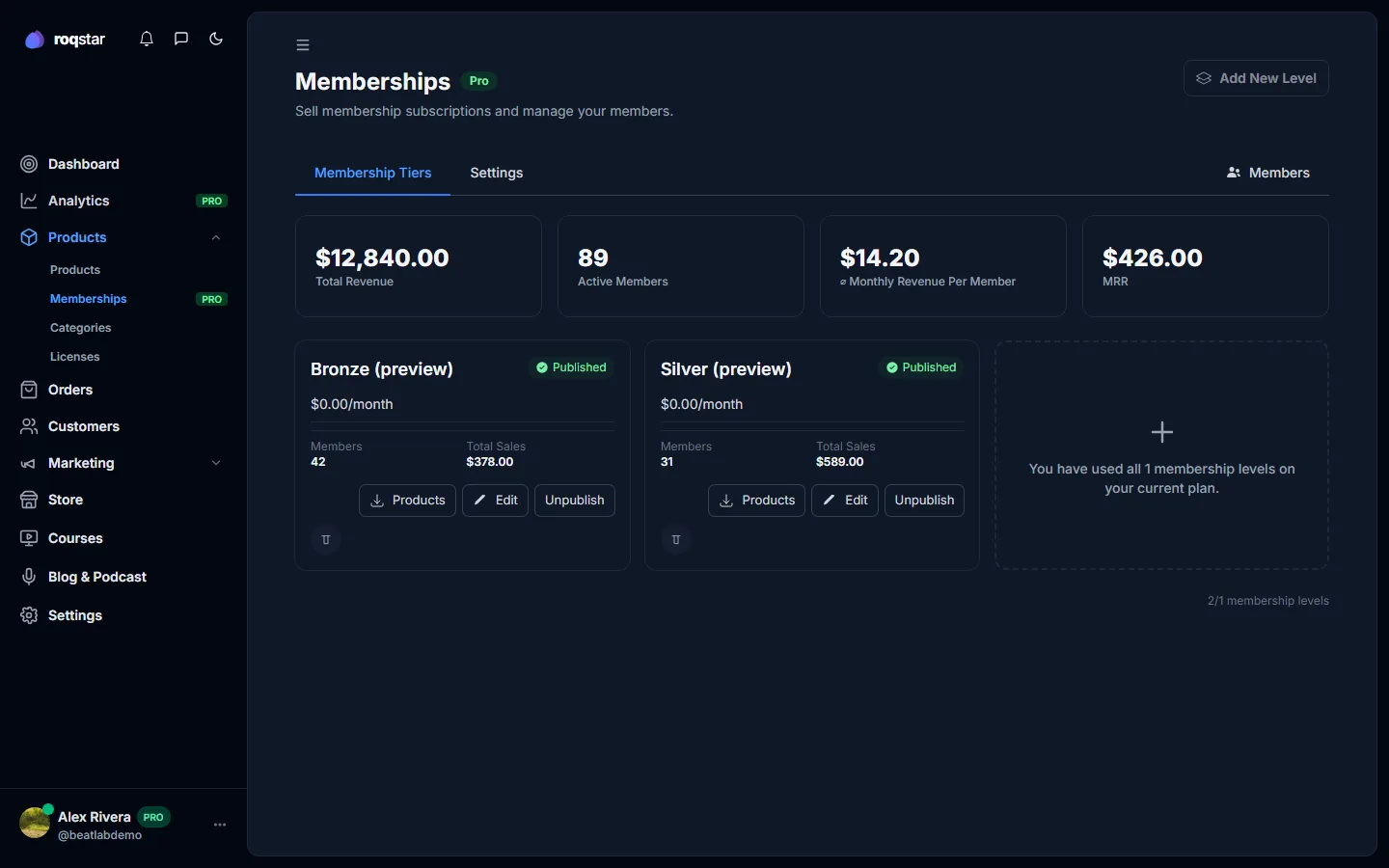
In Roqstar, sellers manage tiers under Products → Memberships:
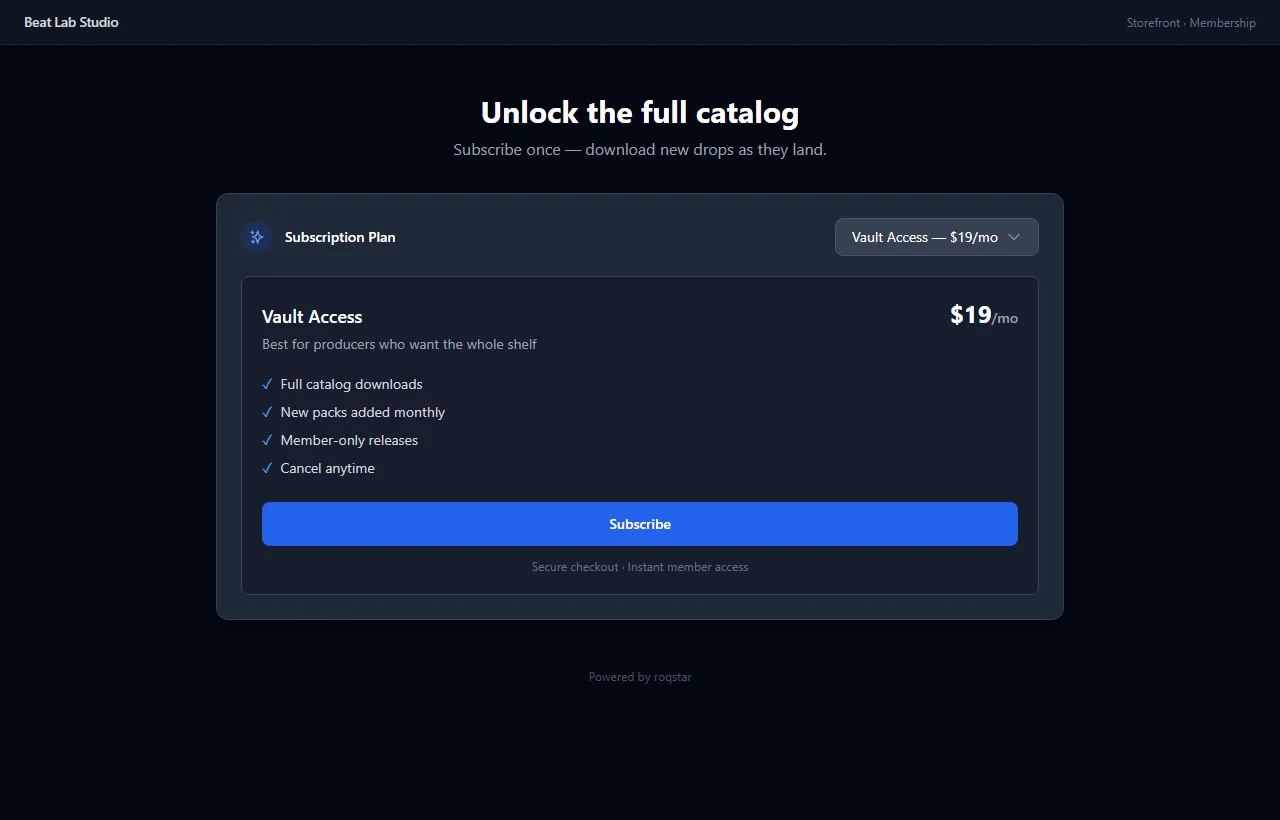
On the storefront, buyers pick a plan and subscribe in place:
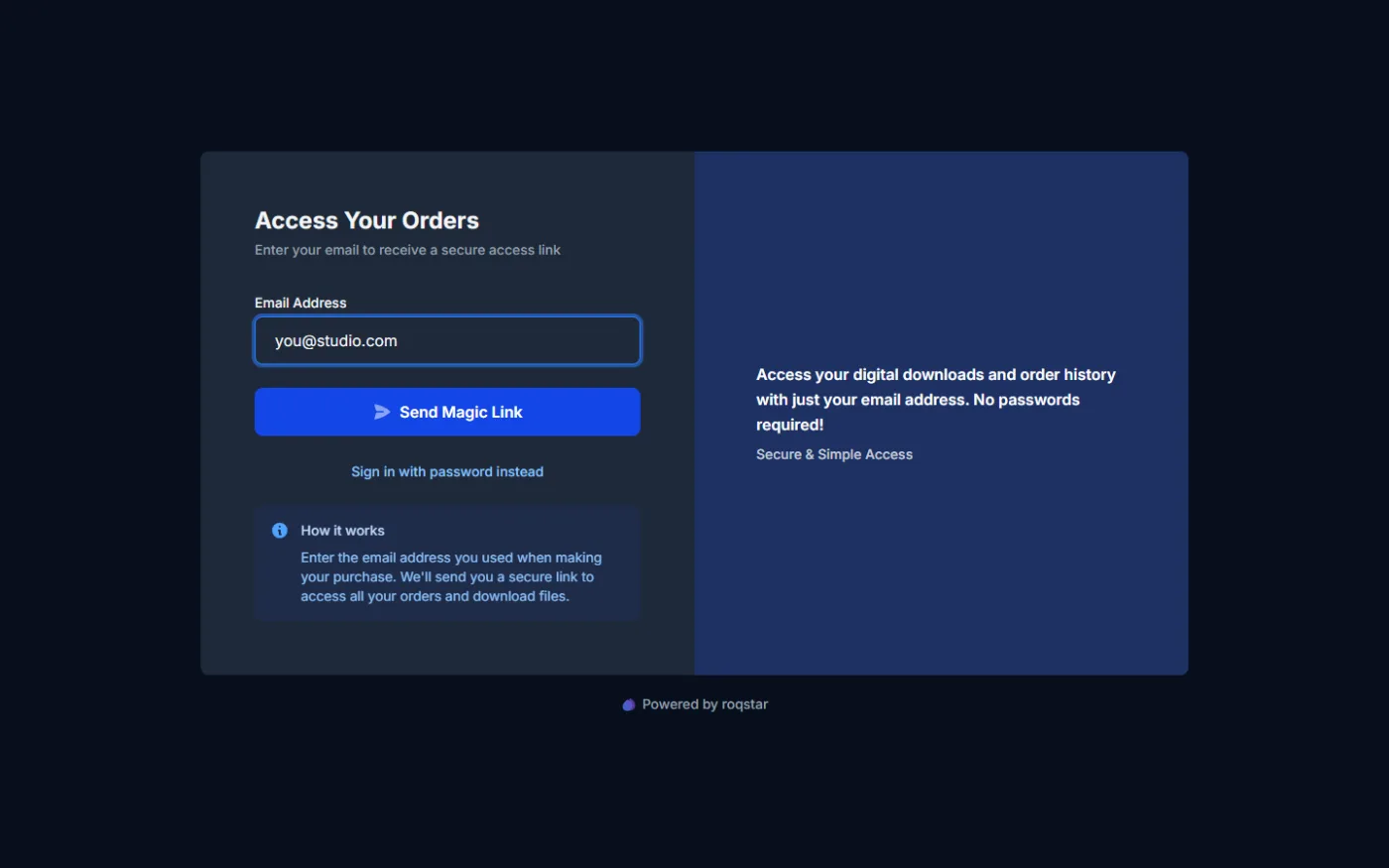
After checkout, buyers open the customer portal with a magic link (placeholder email only in this preview — no real customer data):
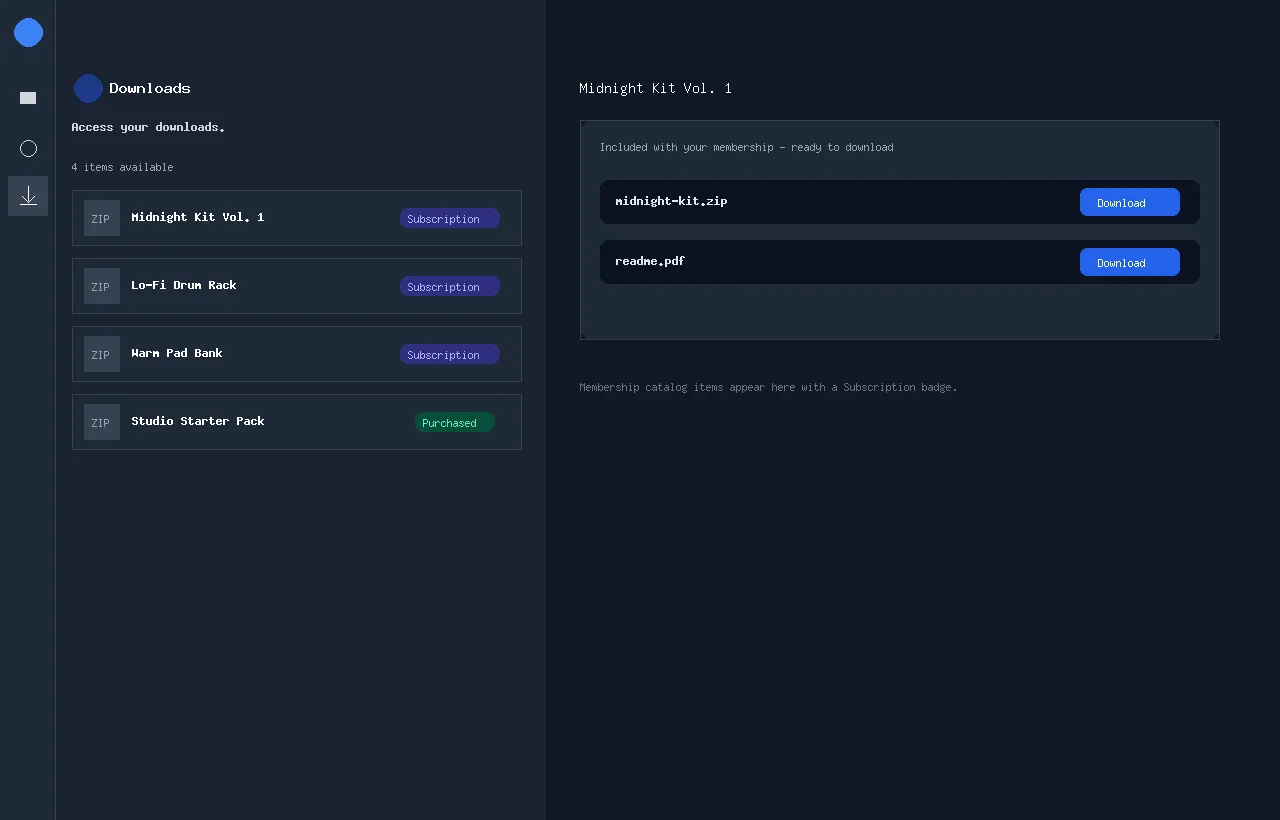
Catalog files from the membership land in Downloads, tagged with a Subscription badge next to any one-off purchases:
The Subscription section is for plan status and billing — not where the vault files live:
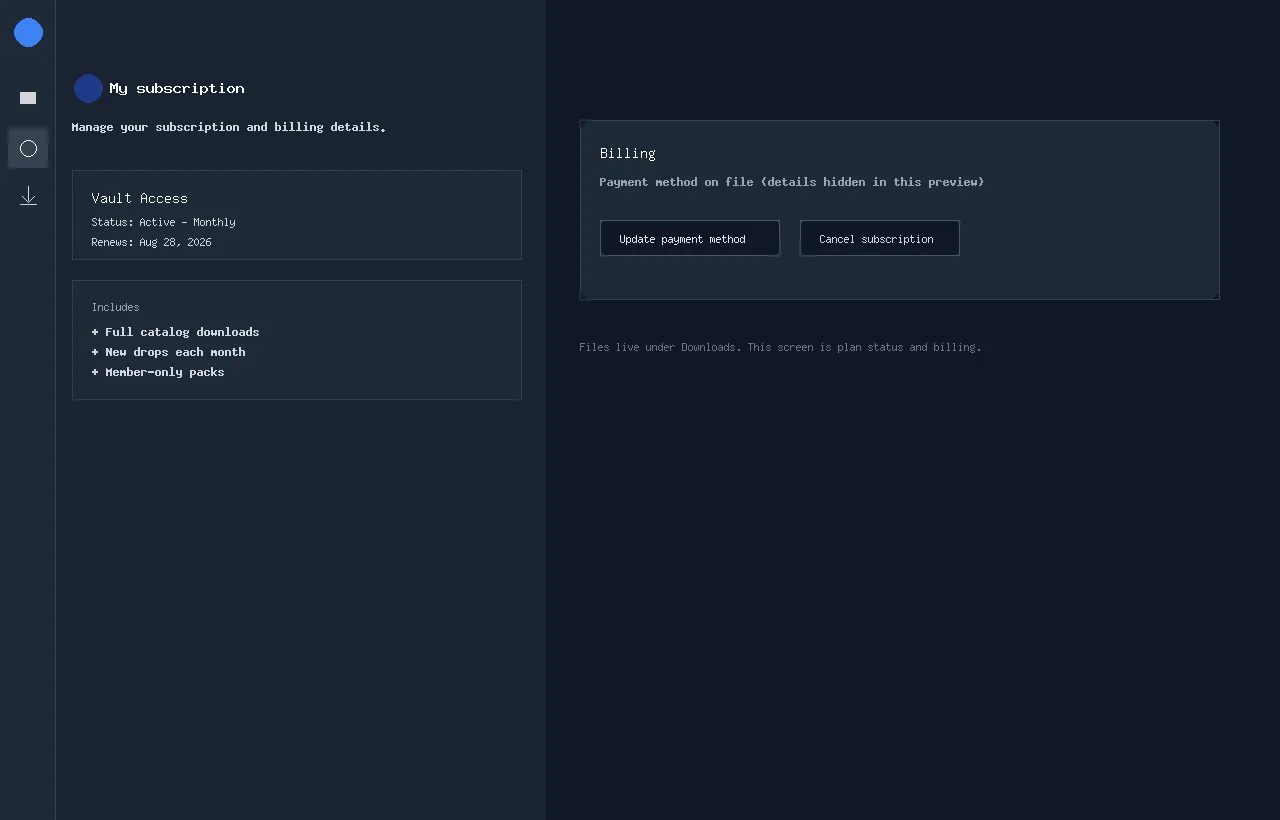
The UI is the easy part. The hard part stays the same: a library worth browsing and a drop schedule you can keep.
Packaging the vault so it does not feel like a dump
Structure beats volume:
- Collections or tags members can browse (Wedding, YouTube, Moody, 2026 drops)
- Clear naming so files do not look like a hard-drive accident
- A “start here” pack or starter set for new members
- Release notes when you add items — even three bullet points build trust
If someone joins and cannot find anything useful in five minutes, the membership feels empty even if the ZIP count is high.
Pricing shape (without the spiral)
Common patterns that stay understandable:
- Monthly vault priced so it feels cheaper than buying two packs — but only if you truly add value over time
- Yearly option for believers (and for your cash-flow sanity)
- Entry pack still for sale — lets cautious buyers sample without a subscription; vault for people who want the shelf
Do not underprice a vault into a corner where updates become resentment. A fair price you can sustain beats a teaser price you abandon.
Vault vs packs: a simple decision table
- Few products, rare updates → packs
- Series buyers, regular drops, growing library → vault (maybe keep hero packs too)
- High-touch custom work → neither as the main model; sell projects or coaching
- Unsure → sell packs until the “do you have everything?” question shows up on its own
Operational reality
A vault is lighter on checkout SKUs and heavier on curation. Budget time for:
- Uploading and labeling new items
- Member emails when something lands
- License questions (“can I use this in client work?”)
- Occasional pruning of weak files so the library stays sharp
If that calendar already scares you, stick with packs a little longer. There is no prize for launching a membership you cannot feed.
Whether you sell one hero pack or open a vault later, the store side is the same job: branded pages, instant downloads, and room to add memberships when the catalog earns them. Roqstar is built for that path — start simple, grow the shelf when your update rhythm is real.